

Mastering Problem-Solving Strategies for Friction in Physics
JEE Mains NEET BITSAT WBJEE preparation

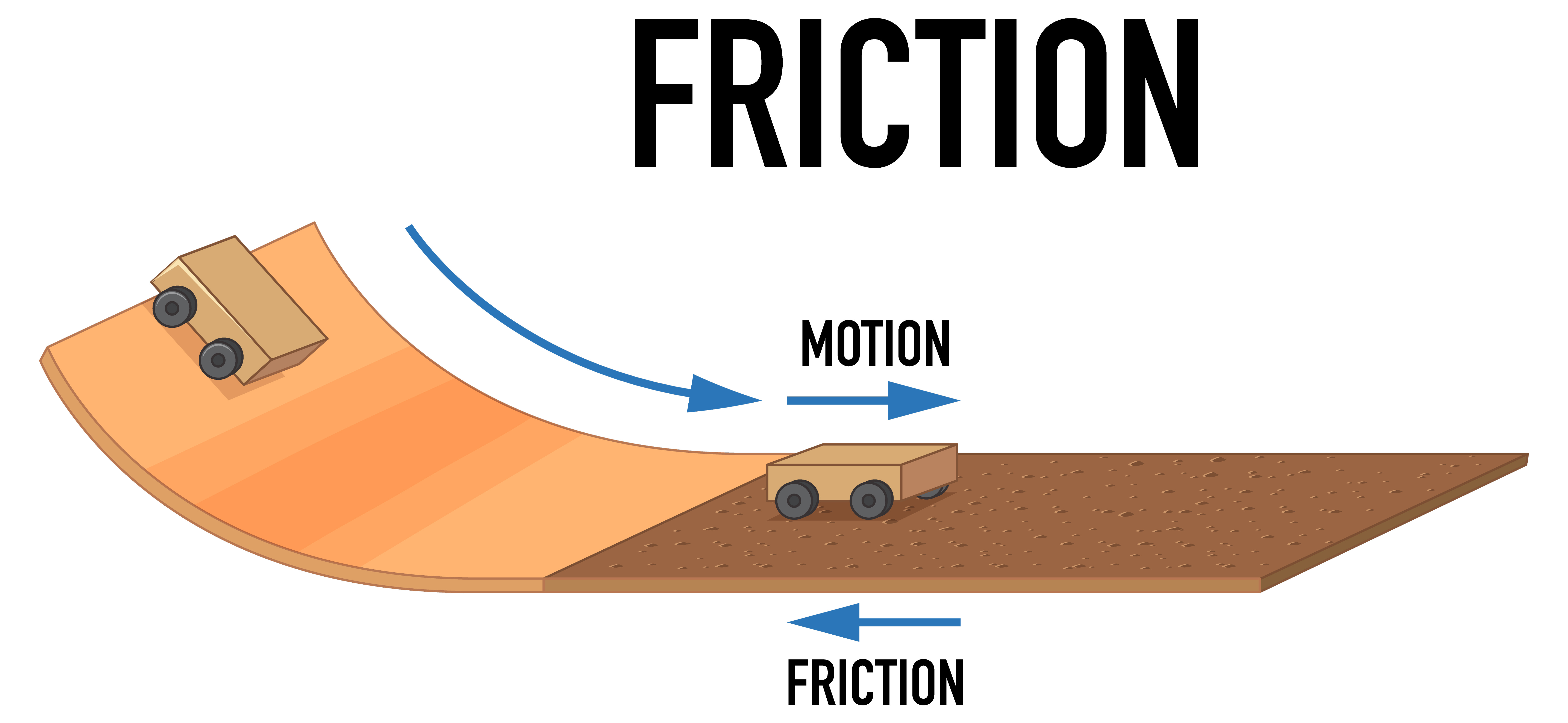
FRICTION PLAYLIST-IMPORTANT QUESTIONS
Friction is a fundamental concept in physics and a common topic in competitive exams like JEE. BITSAT, WBJEE, NEET. While friction problems may seem daunting at first, having a systematic approach can simplify even the trickiest questions. In this blog, we’ll explore key problem-solving strategies to tackle friction-related questions effectively.
1. Understand the Types of Friction
Before solving problems, familiarize yourself with the three main types of friction:
Static Friction (μs): The force that resists the initiation of motion. It acts when the object is stationary.
Kinetic Friction (μk): The force that resists the motion of a moving object.
Rolling Friction: The resistance experienced by an object rolling over a surface, much smaller compared to static or kinetic friction.
Key Tip: Static friction has a maximum value, Fs,max=μs N where N is the normal force. Ensure you know when static friction transitions to kinetic friction.
2. Free-Body Diagrams (FBD) Are Your Best Friend
Visualizing forces is crucial for solving friction problems. Follow these steps:
Draw the object: Represent it as a point or block.
Identify forces: Include gravitational force (mg), normal force (N), applied force (Fapplied), frictional force (Ff), and any other forces acting on the object.
Show directions: Indicate the direction of friction, which always opposes motion or the tendency to move.
Key Tip: Double-check that all forces are included and balanced appropriately for static or dynamic scenarios.
3. Use Equations of Motion with Friction
When solving friction problems, apply Newton’s second law:
Fnet=ma
Here, Fnet includes frictional forces. For example:
If a block slides down an inclined plane: Fnet=mgsinθ−μkN where N=mgcosθ.
If a block is stationary on a plane, the static friction balances the applied force until Fapplied ≤ μs N.
Key Tip: Identify whether the problem involves static or kinetic friction using the correct coefficient (μs or μk).
4. Break Forces into Components
In cases involving inclined planes or forces applied at angles, break forces into components:
Perpendicular to the surface: N=mgcosθ
Parallel to the surface: Fparallel=mgsinθ
Key Tip: Components help simplify friction calculations, especially when working with inclined planes.
5. Identify the Limiting Condition
Many friction problems involve a limiting case where static friction reaches its maximum value:
Fsmax=μsN
If the applied force exceeds Fsmax, the object starts moving, and kinetic friction comes into play. Use this condition to determine whether the object is stationary or moving.
Key Tip: Always check if the applied force is greater than Fsmax before assuming motion.
6. Leverage Work and Energy Principles
In some problems, instead of focusing on forces, use work-energy relationships:
Work done by friction: Wf=−Ff⋅d
Total work-energy theorem: ΔK+ΔU=Wnet
Key Tip: This approach is particularly useful when the problem involves distances or velocities rather than explicit forces.
7. Practice with Common Scenarios
Friction problems often follow certain patterns. Practice these scenarios to build confidence:
A block on a horizontal surface with an applied force.
Motion on an inclined plane (with or without friction).
Pulley systems where friction acts on one or more components.
Rolling motion with rolling friction.
Key Tip: Understand how friction impacts these setups and look for commonalities in problem-solving.
8. Pay Attention to Units and Values
Ensure you use consistent units for mass, acceleration, and force (e.g., SI units: kg, m/s2, ). Verify that coefficients of friction (μ) are dimensionless.
Key Tip: Double-check calculations for errors, especially when substituting values into formulas.
Conclusion
Friction problems can be challenging, but mastering the above strategies can make them manageable. Always start by understanding the problem, drawing a free-body diagram, and applying the appropriate equations. With consistent practice and attention to detail, friction will become one of your strongest areas in physics.
Happy problem-solving!